Designed for interaction
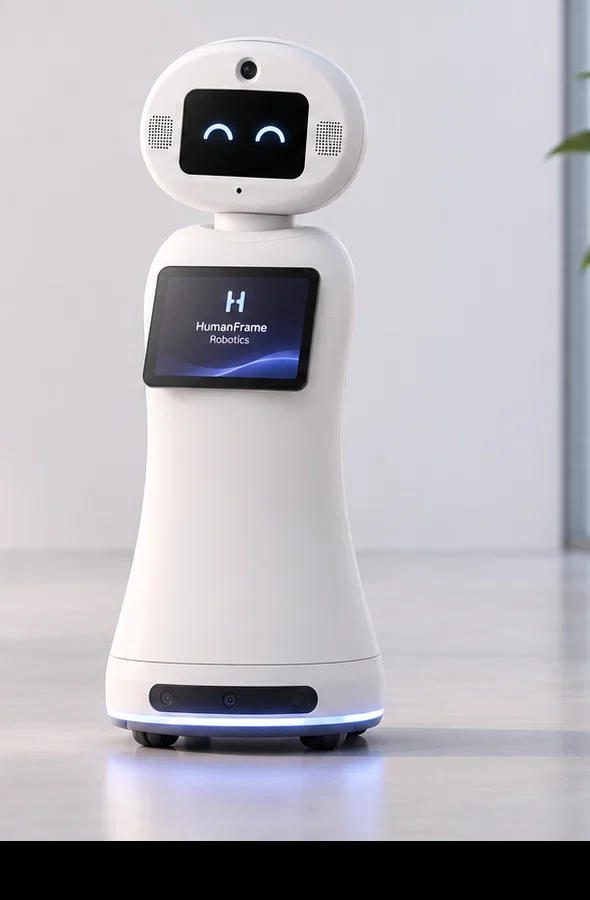
The intended robot centers on conversation, expressive feedback, and interactive content. Its physical form supports the experience researchers want to explore.
Why HumanFrame
A social robotics platform designed around the needs of the researchers, educators, and builders who use it.
Our mission is to make interactive robotics more accessible by building the physical robot and the software environment together.
A practical starting point
Getting a social robotics experiment running can involve a substantial hardware budget, specialized integration, and software built for one activity. Those demands can shape which ideas a lab or classroom can explore.
HumanFrame's response is to develop an approachable research robot with reusable software foundations. We aim to make it more practical to create and refine interactive applications on real hardware.
We are an early-stage company developing our first platform. Affordability is an engineering and business goal; pricing, availability, and comparative cost savings have not been established.
Our approach
The intended robot centers on conversation, expressive feedback, and interactive content. Its physical form supports the experience researchers want to explore.
Runtime, SDK, and application tools are being developed alongside the hardware so custom experiences can share a common foundation.
A focused first-generation design and modular architecture guide our work toward a more accessible platform for research and education.
New applications and physical capabilities can be added as their supporting systems are developed and validated.
Different work. A shared foundation.
Research first. Built to evolve.
Our first focus is a social research robot for education and human-robot interaction. The team is developing the hardware, runtime, developer tools, and application environment as one system.
Over time, that foundation could support more capable robotic embodiments, including humanoid platforms. Those are longer-term ambitions, separate from Alp's first-generation research design.
We want the direction to be informed by practical research needs and the people doing the work.
Meet the people building HumanFrameShare the applications, teaching goals, and research questions that matter to your team.